
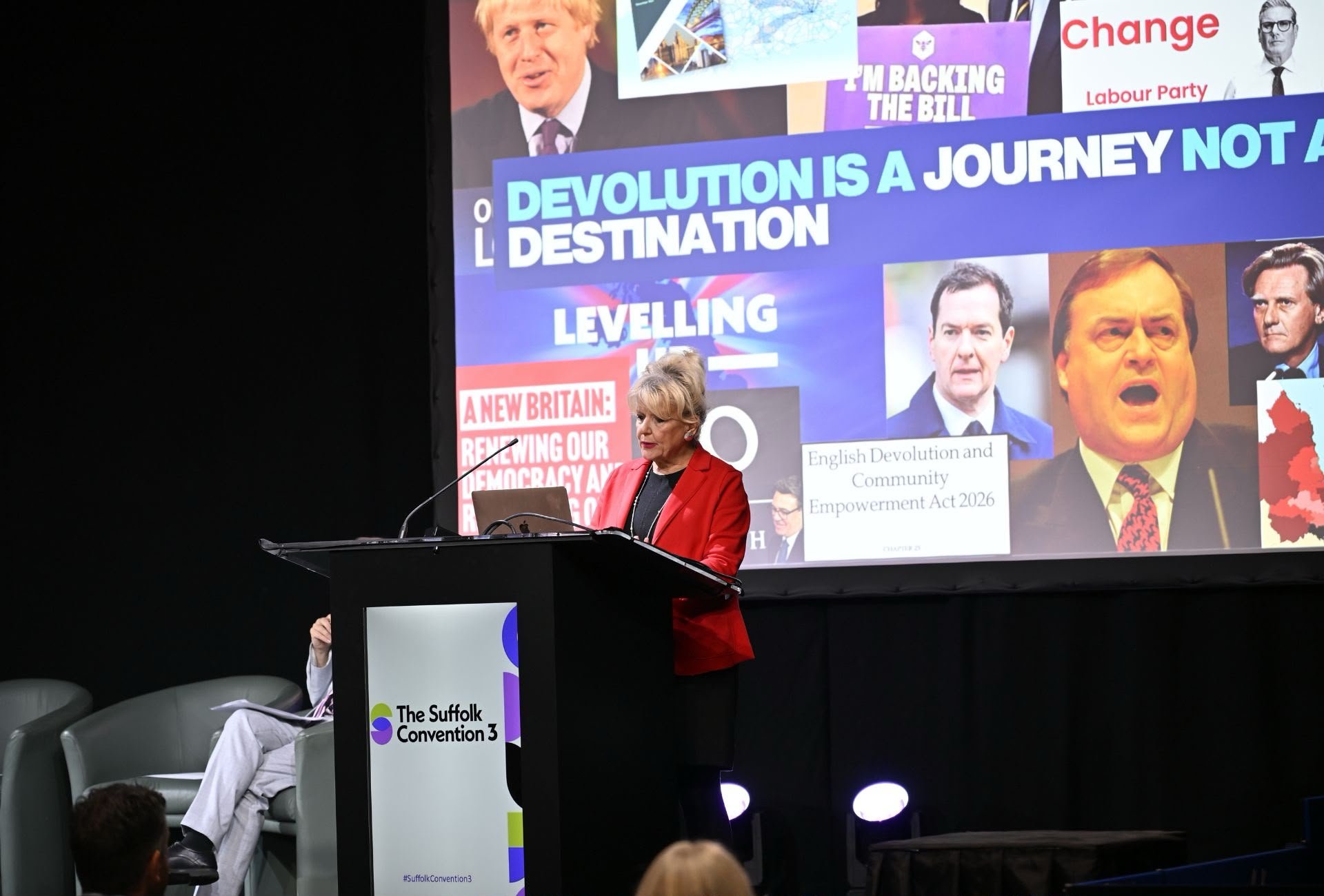
Speaking at the Suffolk Convention, Devo Agency’s Gill Morris reflects on how the latest announcements on LGR and Fiscal devolution have changed the pace and raised the stakes. The fast-forward button has been pressed by the Chancellor.
We now know that the LGR pause was just that – a pause, not a change of direction.
And the announcements last week on Local Government Reorganisation (LGR) and fiscal devolution have made one thing abundantly clear: English devolution is pressing the fast-forward button.
The Government has reaffirmed its commitment to a devolved England, with Norfolk and Suffolk firmly in the frame. The uncertainty surrounding the immediate timetable for LGR should not be confused with any lack of ambition for devolution. The direction of travel is clear, and the pace is picking up.
But it is the combination of the LGR announcements and the Budget’s fiscal devolution commitments that really changes the landscape.
We are moving beyond a debate about structures, boundaries and who does what. We are beginning to see the prospect of a fundamental shift in where power sits, who controls the money and who is accountable for delivering growth.
The Fiscal Devolution Roadmap is potentially transformational. Greater retention of business rates, an assigned share of income tax for mayors, new revenue-raising powers and greater borrowing capacity all point towards a different relationship between central and local government.
This is not simply about devolving more responsibilities while leaving the money in Whitehall. It is about giving places a greater stake in their own economic success.
And that makes the choices facing Norfolk and Suffolk much more urgent.
The LGR pause was not a reason to wait and see. It was a reason to accelerate
The future shape of local government matters, but it must not become a distraction from the bigger prize. Leaders need to be developing their future economic strategies now; agreeing regional priorities, building partnerships and getting investment-ready. Have a plan - an economic strategy - which works. The whole point of devolution is that local leaders of all parties are best placed to make decisions on what’s needed. Devolution gives Mayors real power but perhaps it is their “soft powers” and freedom to convene and build consensus which makes it work?
The next phase of devolution will not wait for everyone to catch up. This is not a time to wait and see what’s going to be done to you by central government. It is time to get ahead and know what you want.
And those who think strategically, work collaboratively and come forward with ambitious, deliverable plans will be better placed to seize the opportunities. Those who spend too long prevaricating about geography and politics risk being left behind.
This is also why the role of a mayor matters so much. With the right powers, resources and democratic mandate, mayors are powerful and mighty beasts. They can bring a region together, champion its interests, attract investment and provide the leadership needed to turn a shared vision into reality.
But the prize comes with responsibility. Greater fiscal power must mean greater accountability. People need to see where the money goes, what it delivers and how it changes their lives.
For Norfolk and Suffolk, this is a moment to raise their sights. Not simply to negotiate a devolution deal, but to think about the kind of regional economy they want to build and the role they can play in making the East of England a powerhouse for growth.
The question is no longer whether devolution is coming. It is whether local leaders are ready to make the most of it.